Homer Residency 2026 - The Exhibitions
Sacredness of Place
A Community Environmental Land Art Installation
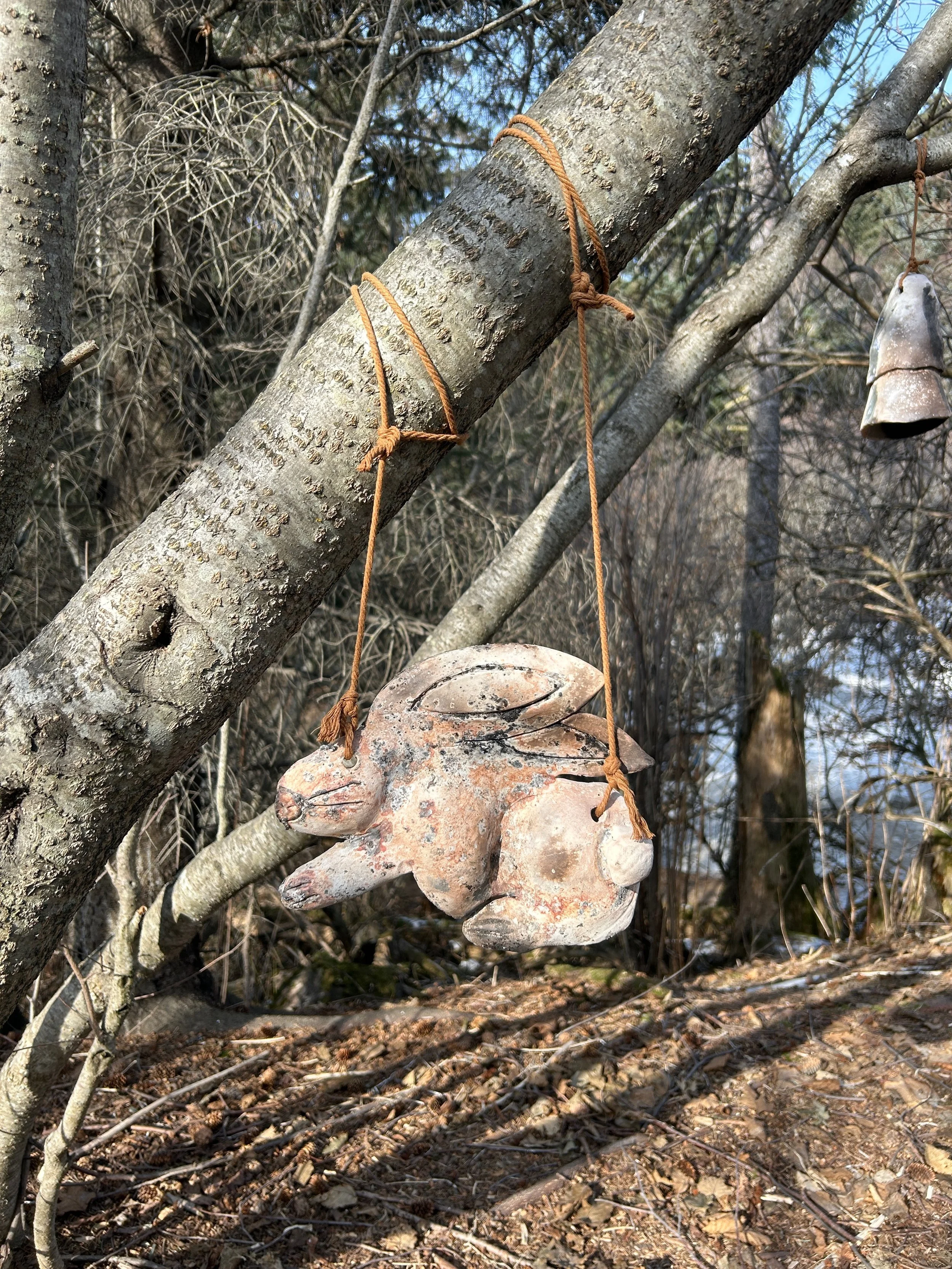
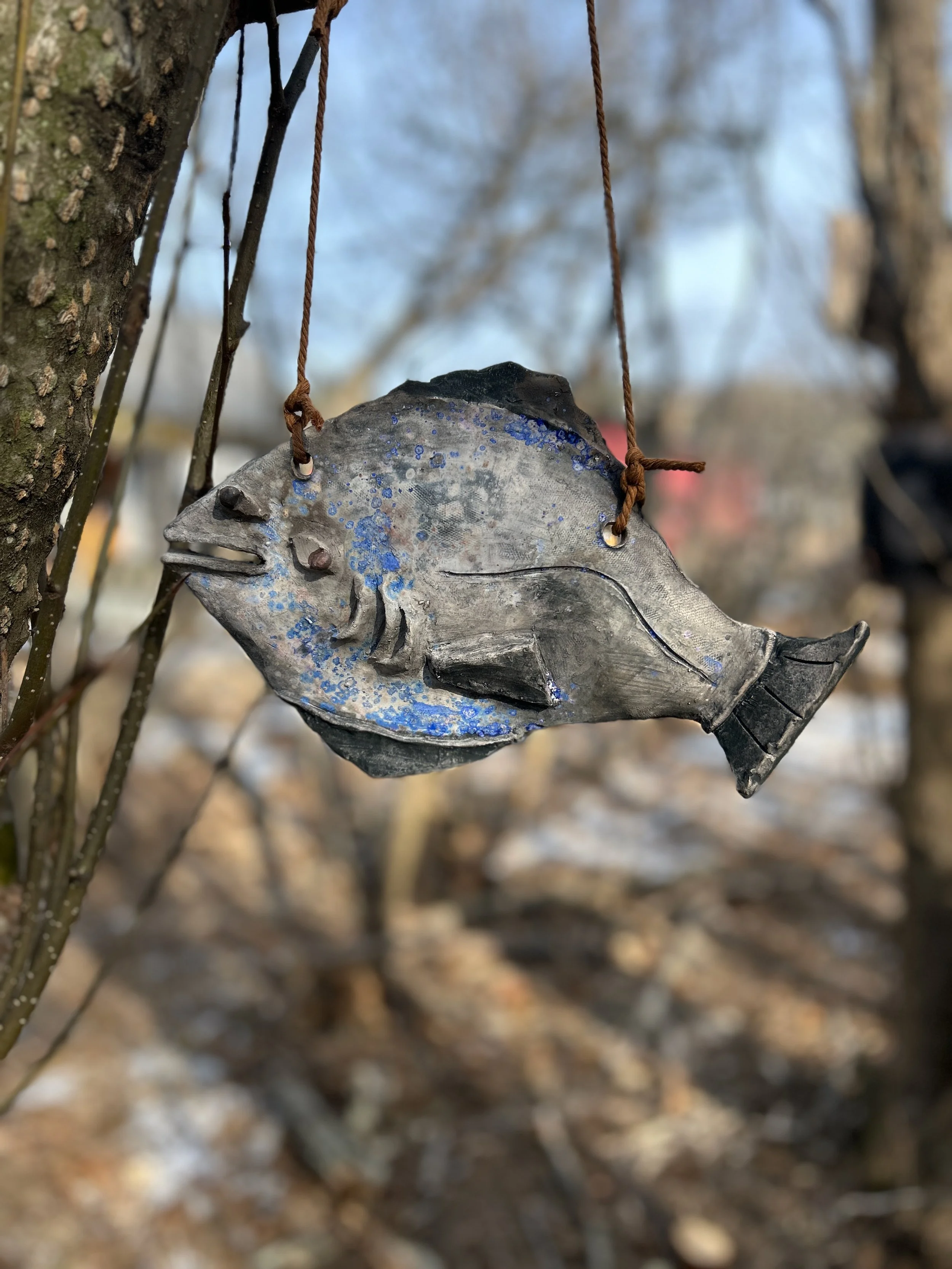
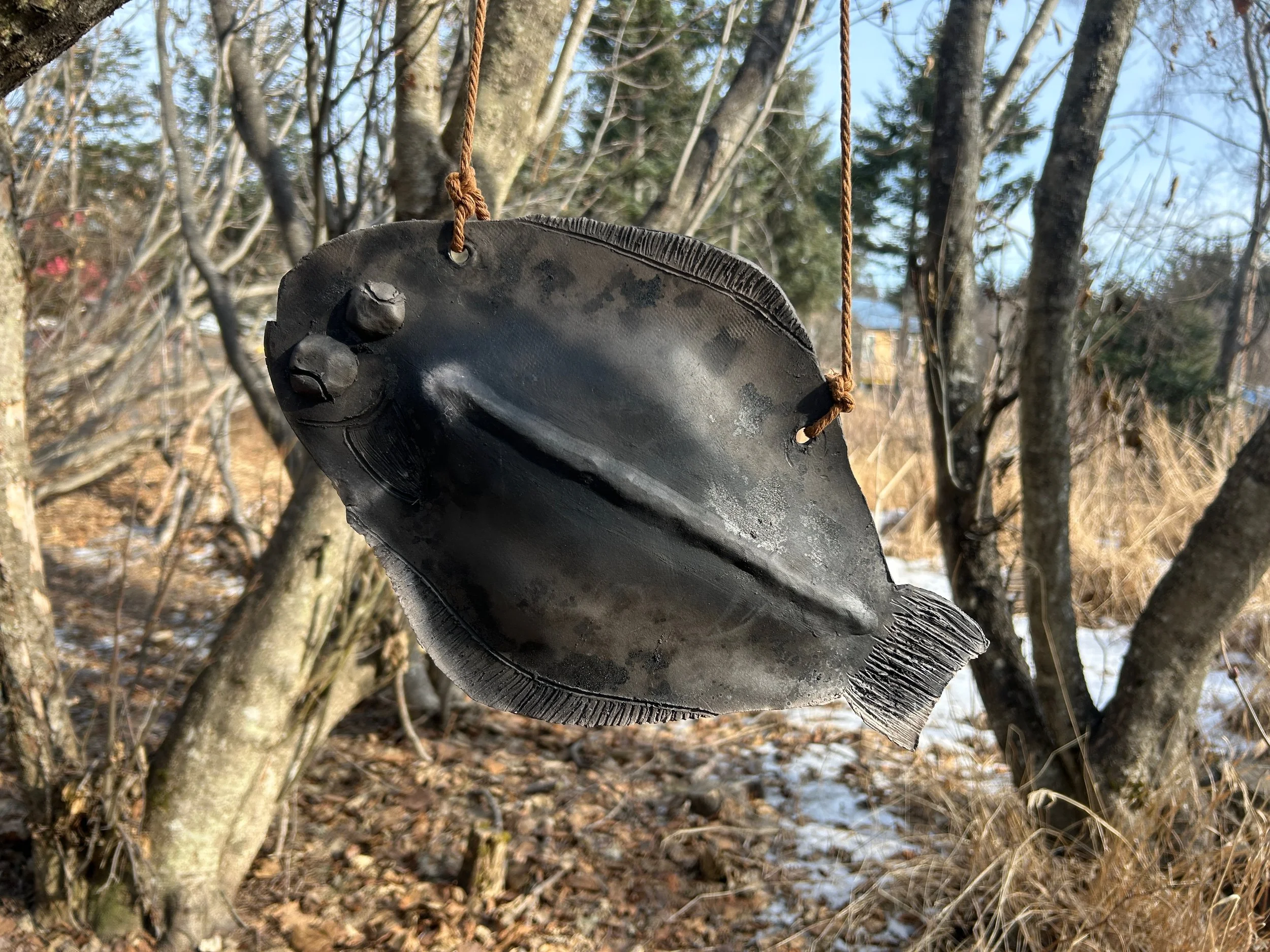
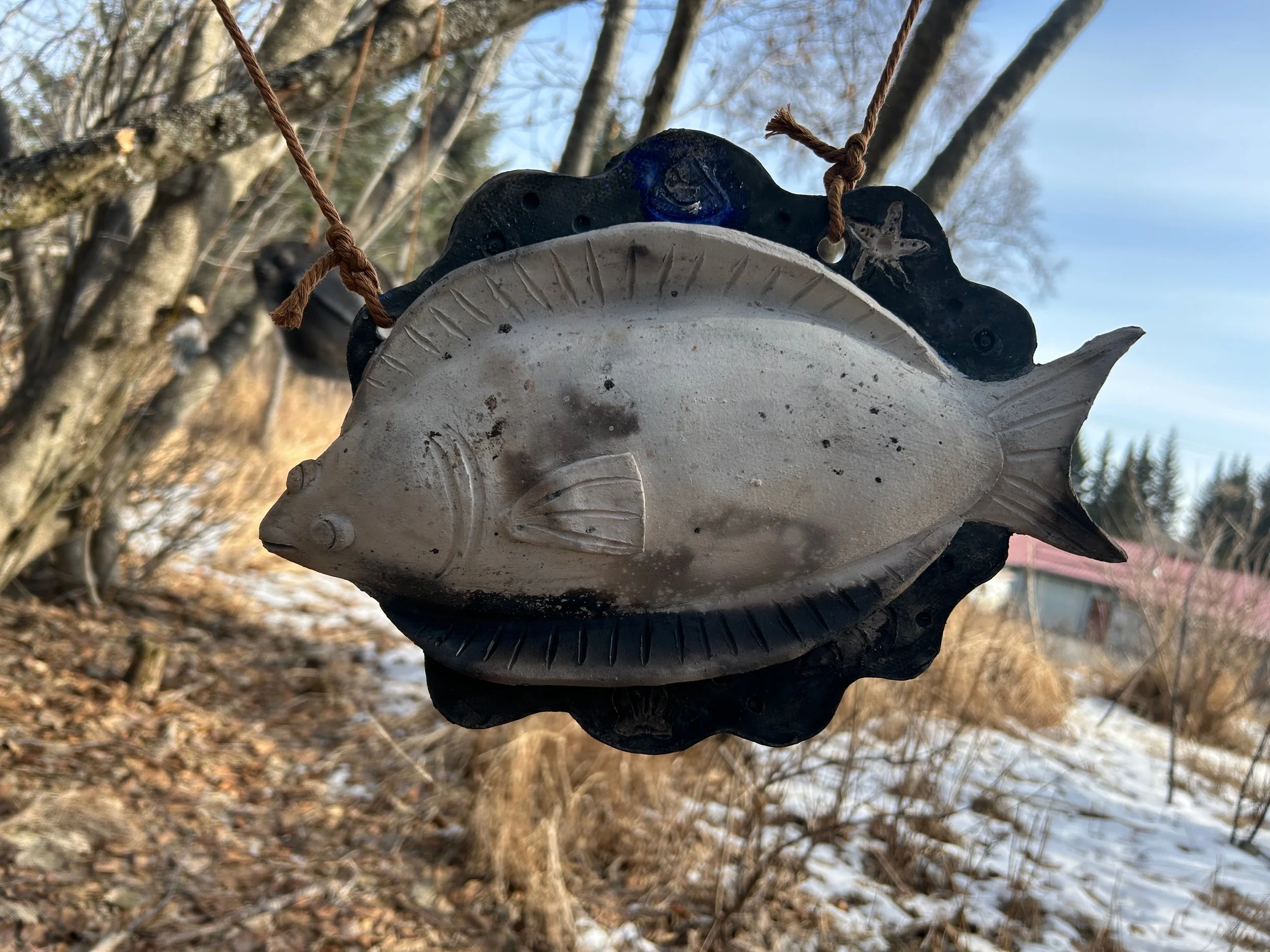
Sacredness of Place is a community-based project that invited participants to reflect on what feels sacred in their lives and landscapes. Wisconsin-based sculptor and installation artist Rebecca Carlton asked Homer community members what experiences, senses, and places shaped their connection to the Kenai Peninsula as home. In response, artists and community members from the southern Kenai Peninsula and beyond created clay sculptures, which were installed nestled in the canopy of alders at the Pratt Museum. The sculptures were formed in raku clay and pit-fired at the Homer Council on the Arts, with surfaces colored using natural and found materials such as salt, seaweed, banana peels, coffee grounds, and metal oxides. Hung on cotton cord, the works are intentionally ephemeral and will gradually weather and return to the earth over time.
-
Chapman School
Dibble Creek Rock
Homer Council on the Arts
Homer High School
Homer Independent Press
Homer News
Jeremy Manz
Juneberry Lodge
KBay Clay
KBBI Radio
Kenai Peninsula College
Paul Banks Elementary School
Sherry Robinson
The Pratt Museum
The Kenai Peninsula Community
-
Artists interested in our human relationships to the natural world.
Artists create their artwork in the natural environment, with the intention of protecting it, not destroying it.
Artists use natural materials found within the environment to create their artwork.
Artwork is sculptural and installation-based.
Artist chose to install and exhibit artwork in the environment verses in a gallery or museum. Interest in rejecting the traditional, commercial gallery and museum confinements.
Art movement established in the mid 1960’s
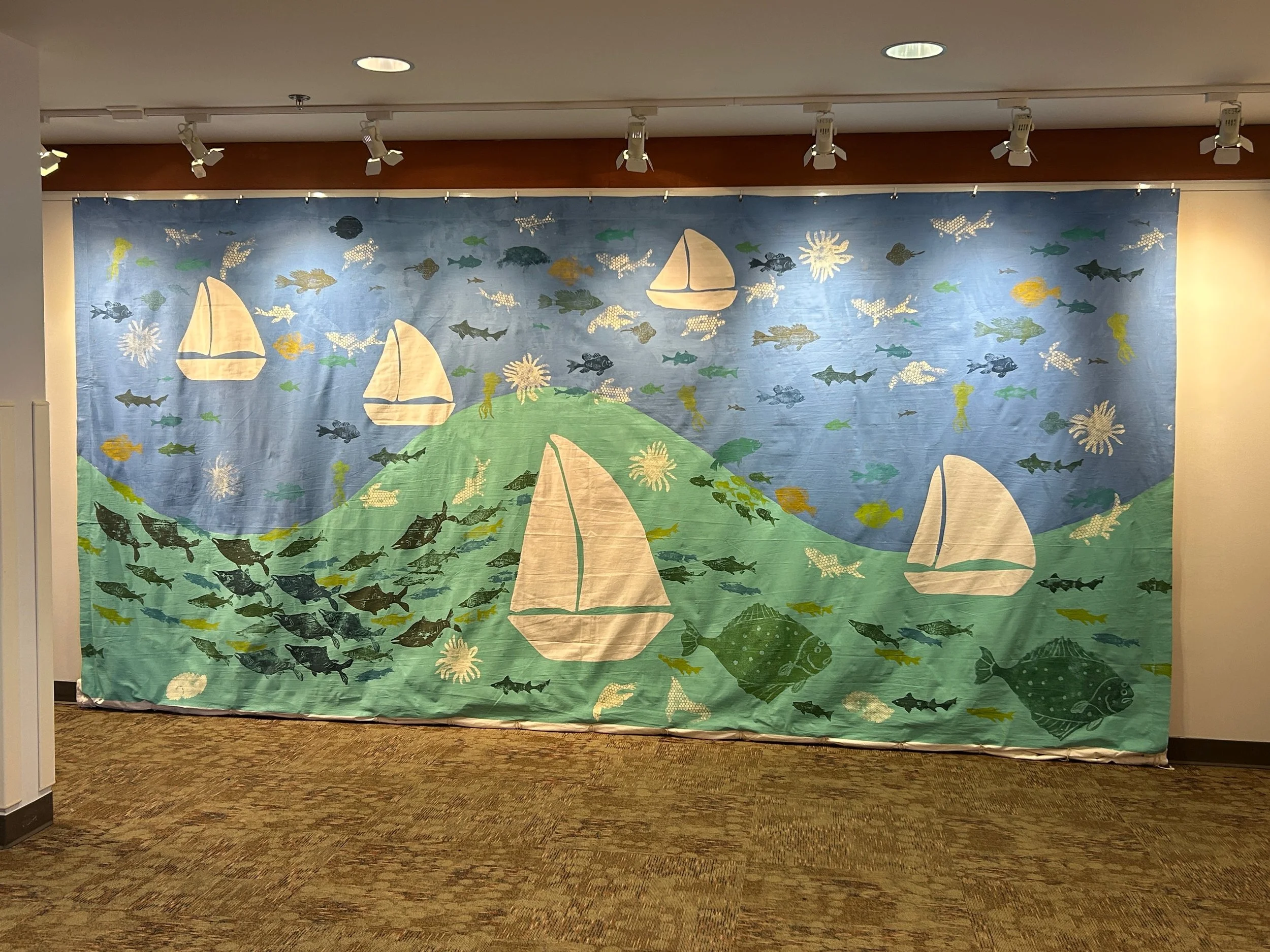
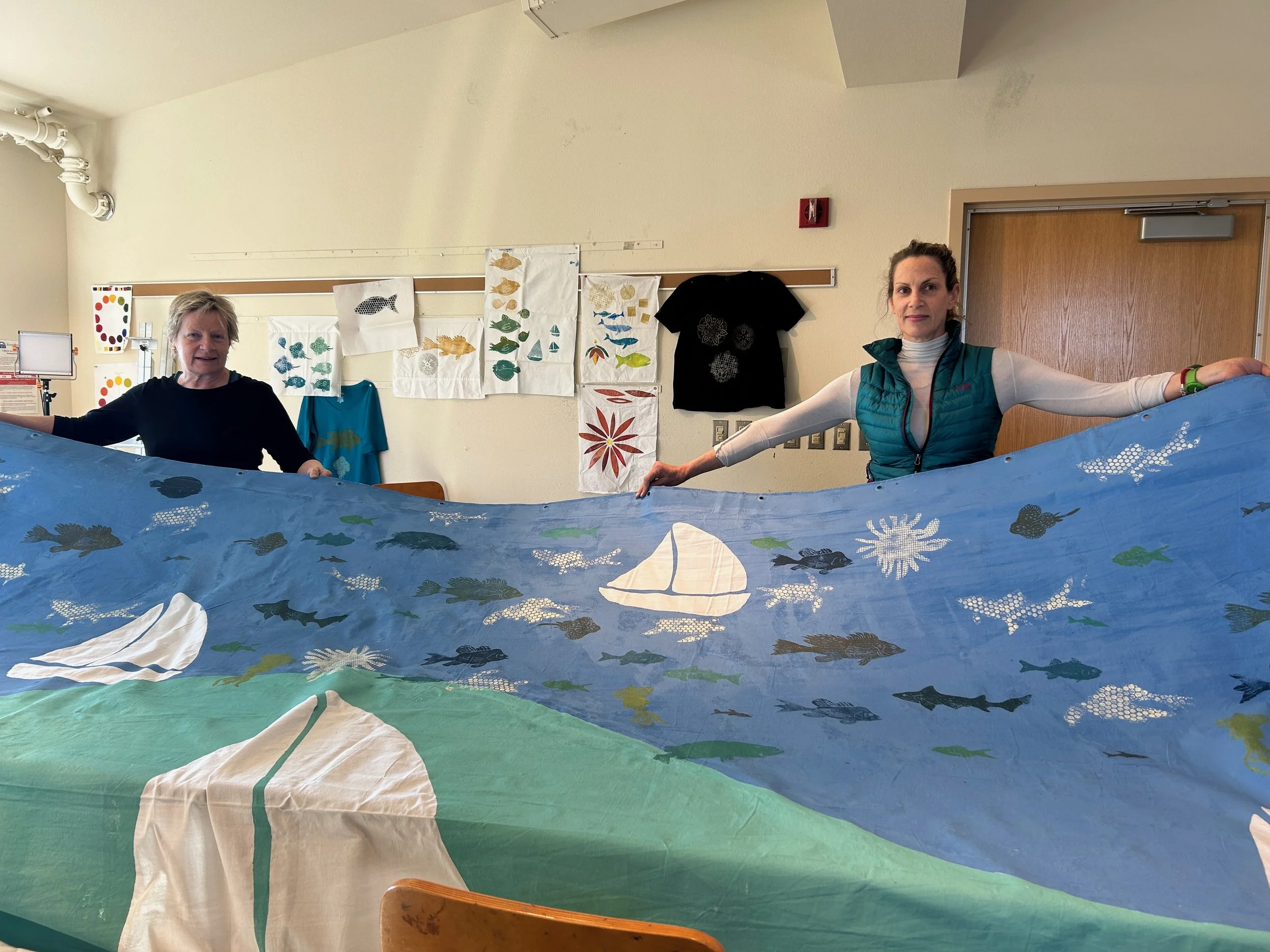
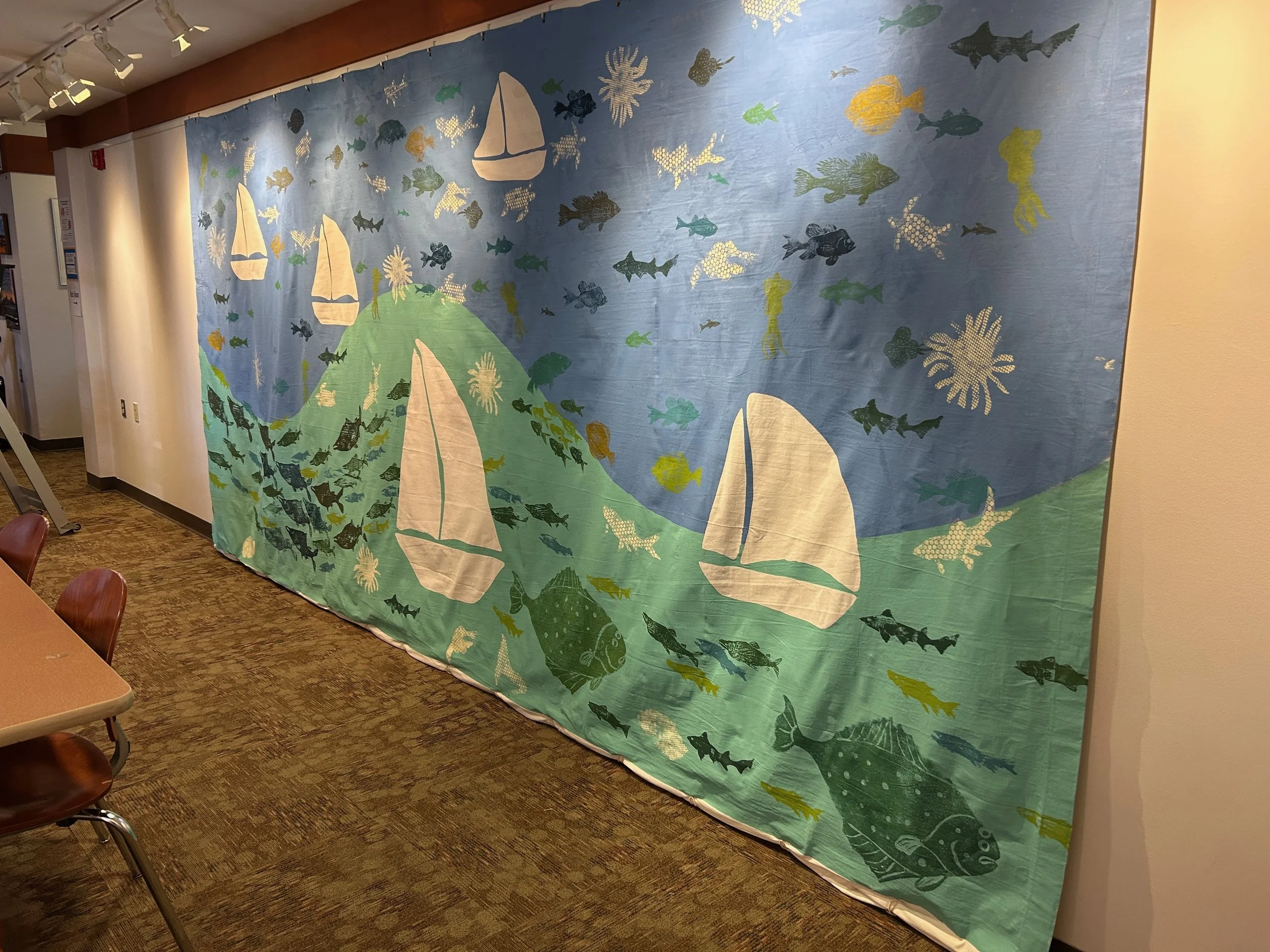
Coastal Contrast Printmaking Project, 2026
Mural printed using upcycled materials 7 x 15 ft
A drop that fills the vase — now permanently installed at Homer's Brewing Company, Homer, Alaska
While Homer gave us a gathering place, the waters here give to everything they touch: a particular quality, a depth, a wildness. It runs through the land. It runs through the beer. It ran through us. Coastal Contrasts arrived at Homer's Brewing Company inadvertently, the way a tide arrives, with a willingness to settle into something larger than itself.
The work was made by four hands: five coastline artists who found each other somewhere between the shoreline and the question: is anyone listening to what the earth is saying? The Climate Artists Collective, born from a year of brainstorming across screens and time zones on Netvvrk, arrived in Homer in the winter of 2026 to meet in real life for the first time. What began as a shared urgency became, in fifteen days, a shared surface, harvested at Kenai Peninsula College, where they gathered, printed, and painted together for the first time.
On it live the fish: the abundant and the vanishing, printed and painted in tandem, through the two languages that bind this collective across three different coastlines — Pacific, Gulf, Atlantic. Formally, the white bubbles are not decoration. They are warnings pressed into the landscape itself. Three dimensional elements made from upcycled plastic build up the surface so that you, standing close, are almost touching what the work is trying to say: that the material which pollutes is also the material that can speak.
Homer's waters are particular. The snowmelt, the glacial runoff, and the salt air, have their own argument to make about what things are made of and where they come from. The same waters that shape the land shape what is brewed here: a terroir of place, of cold, of wildness. Homer did something similar to this collective. It gave the work a body. It gave the artists a particular gravity they didn't have before they arrived. The drop fills the vase, and the vase in turn, gives the drop a home.
-
MEDIUM
Printmaking, painting & upcycled plastic on canvas drop
SIZE
12 - 17 ft
HARVESTED AT
Kenai Peninsula College, Homer, Alaska, winter 2026
NOW HOUSED AT
Homer's Brewing Company, Homer, Alaska
-
Coho Salmon
Green Turtle
Pinto Abalone
Ringed Seal
Sock Eye Salmon
Sunflower Sea Starfish
Stellar Sea Lion
Yellow Eye Rockfish